Paylinkz — One Link for Every Payment
Paylinkz — One Link for Every Payment
Paylinkz — One Link for Every Payment
Designing a unified payment experience that reduces friction across multiple digital payment platforms.
Focused on reducing payment fragmentation for creators and frequent payment users.
Designing a unified payment experience that reduces friction across multiple digital payment platforms.
Focused on reducing payment fragmentation for creators and frequent payment users.
Designing a unified payment experience that reduces friction across multiple digital payment platforms.
Focused on reducing payment fragmentation for creators and frequent payment users.
Roles & Responsibilities
Roles & Responsibilities
Roles & Responsibilities
Product Designer
Product Designer
Product Designer
Framed payment fragmentation into a clear, solvable product problem.
Designed a mobile-first, scalable UI across web and app.
Made trade-offs between simplicity, flexibility, and future integrations with engineers.
Framed payment fragmentation into a clear, solvable product problem.
Designed a mobile-first, scalable UI across web and app.
Made trade-offs between simplicity, flexibility, and future integrations with engineers.
Framed payment fragmentation into a clear, solvable product problem.
Designed a mobile-first, scalable UI across web and app.
Made trade-offs between simplicity, flexibility, and future integrations with engineers.
Project Context
Project Context
Project Context
Timeline: June 2023 – August 2023
Timeline: June 2023 – August 2023
Timeline: June 2023 – August 2023
Company: Paylinkz🇺🇸 (Fintech — Digital Payments)
Company: Paylinkz🇺🇸 (Fintech — Digital Payments)
Company: Paylinkz🇺🇸 (Fintech — Digital Payments)
Product Area: Payment Experience Platform
Product Area: Payment Experience Platform
Product Area: Payment Experience Platform
Background & Problem
Background & Problem
Background & Problem
As peer-to-peer digital payments grow rapidly in the U.S., users often rely on multiple platforms such as Venmo, CashApp, Zelle, and PayPal. Each platform requires a separate link or identifier, forcing users to manage, share, and remember multiple payment destinations.
This fragmentation creates several problems:
Confusion for senders when choosing the correct payment method
Missed or delayed transactions
Inefficient sharing, especially for creators, freelancers, and small businesses who accept payments frequently
For creators and small businesses, this often resulted in lost payments and lower conversion.
As peer-to-peer digital payments grow rapidly in the U.S., users often rely on multiple platforms such as Venmo, CashApp, Zelle, and PayPal. Each platform requires a separate link or identifier, forcing users to manage, share, and remember multiple payment destinations.
This fragmentation creates several problems:
Confusion for senders when choosing the correct payment method
Missed or delayed transactions
Inefficient sharing, especially for creators, freelancers, and small businesses who accept payments frequently
For creators and small businesses, this often resulted in lost payments and lower conversion.
As peer-to-peer digital payments grow rapidly in the U.S., users often rely on multiple platforms such as Venmo, CashApp, Zelle, and PayPal. Each platform requires a separate link or identifier, forcing users to manage, share, and remember multiple payment destinations.
This fragmentation creates several problems:
Confusion for senders when choosing the correct payment method
Missed or delayed transactions
Inefficient sharing, especially for creators, freelancers, and small businesses who accept payments frequently
For creators and small businesses, this often resulted in lost payments and lower conversion.
Paylinkz was created to simplify this experience by allowing users to consolidate all payment methods into one single, shareable link.
Paylinkz was created to simplify this experience by allowing users to consolidate all payment methods into one single, shareable link.
Paylinkz was created to simplify this experience by allowing users to consolidate all payment methods into one single, shareable link.
Objectives
Objectives
Objectives
Design a unified payment hub that aggregates multiple payment methods into one link
Reduce friction and cognitive load without overwhelming first-time users
Deliver a consistent experience across mobile and web with minimal re-learning
Keep the interface simple while staying future-ready for new integrations
Design a unified payment hub that aggregates multiple payment methods into one link
Reduce friction and cognitive load without overwhelming first-time users
Deliver a consistent experience across mobile and web with minimal re-learning
Keep the interface simple while staying future-ready for new integrations
Design a unified payment hub that aggregates multiple payment methods into one link
Reduce friction and cognitive load without overwhelming first-time users
Deliver a consistent experience across mobile and web with minimal re-learning
Keep the interface simple while staying future-ready for new integrations
Core Challenge
Core Challenge
Core Challenge
The core challenge was not simply combining multiple payment platforms into one interface, but designing an experience that felt effortless and trustworthy at the moment of payment.
The product had to balance several competing constraints:
First-time users needed zero setup friction and immediate clarity
Multiple payment platforms had different naming conventions and trust perceptions
The interface needed to stay simple, without feeling limited or inflexible
The product could not feel like “just another link-in-bio tool,” but a payment-first experience
The core challenge was not simply combining multiple payment platforms into one interface, but designing an experience that felt effortless and trustworthy at the moment of payment.
The product had to balance several competing constraints:
First-time users needed zero setup friction and immediate clarity
Multiple payment platforms had different naming conventions and trust perceptions
The interface needed to stay simple, without feeling limited or inflexible
The product could not feel like “just another link-in-bio tool,” but a payment-first experience
The core challenge was not simply combining multiple payment platforms into one interface, but designing an experience that felt effortless and trustworthy at the moment of payment.
The product had to balance several competing constraints:
First-time users needed zero setup friction and immediate clarity
Multiple payment platforms had different naming conventions and trust perceptions
The interface needed to stay simple, without feeling limited or inflexible
The product could not feel like “just another link-in-bio tool,” but a payment-first experience
The challenge was making complexity invisible, while keeping the system flexible and future-ready.
The challenge was making complexity invisible, while keeping the system flexible and future-ready.
The challenge was making complexity invisible, while keeping the system flexible and future-ready.
Design Approach & Solution
Design Approach & Solution
Design Approach & Solution
To address the core challenges, I focused on three product-driven design strategies:
To address the core challenges, I focused on three product-driven design strategies:
To address the core challenges, I focused on three product-driven design strategies:
Mobile-First, Then Scale
Mobile-First, Then Scale
Mobile-First, Then Scale
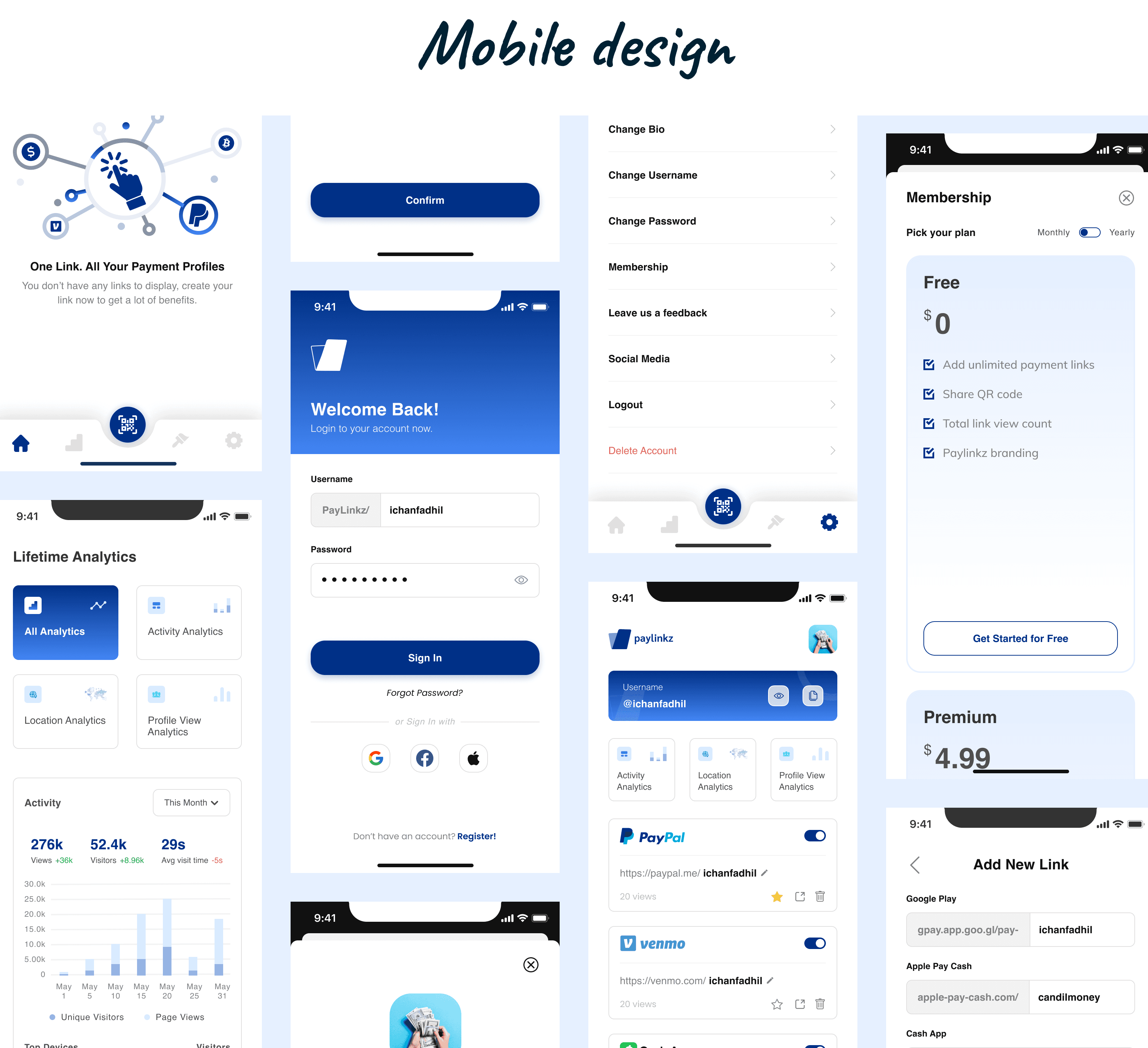
Most payment interactions happen in time-sensitive, mobile contexts, often when users want to complete a transaction quickly without hesitation.
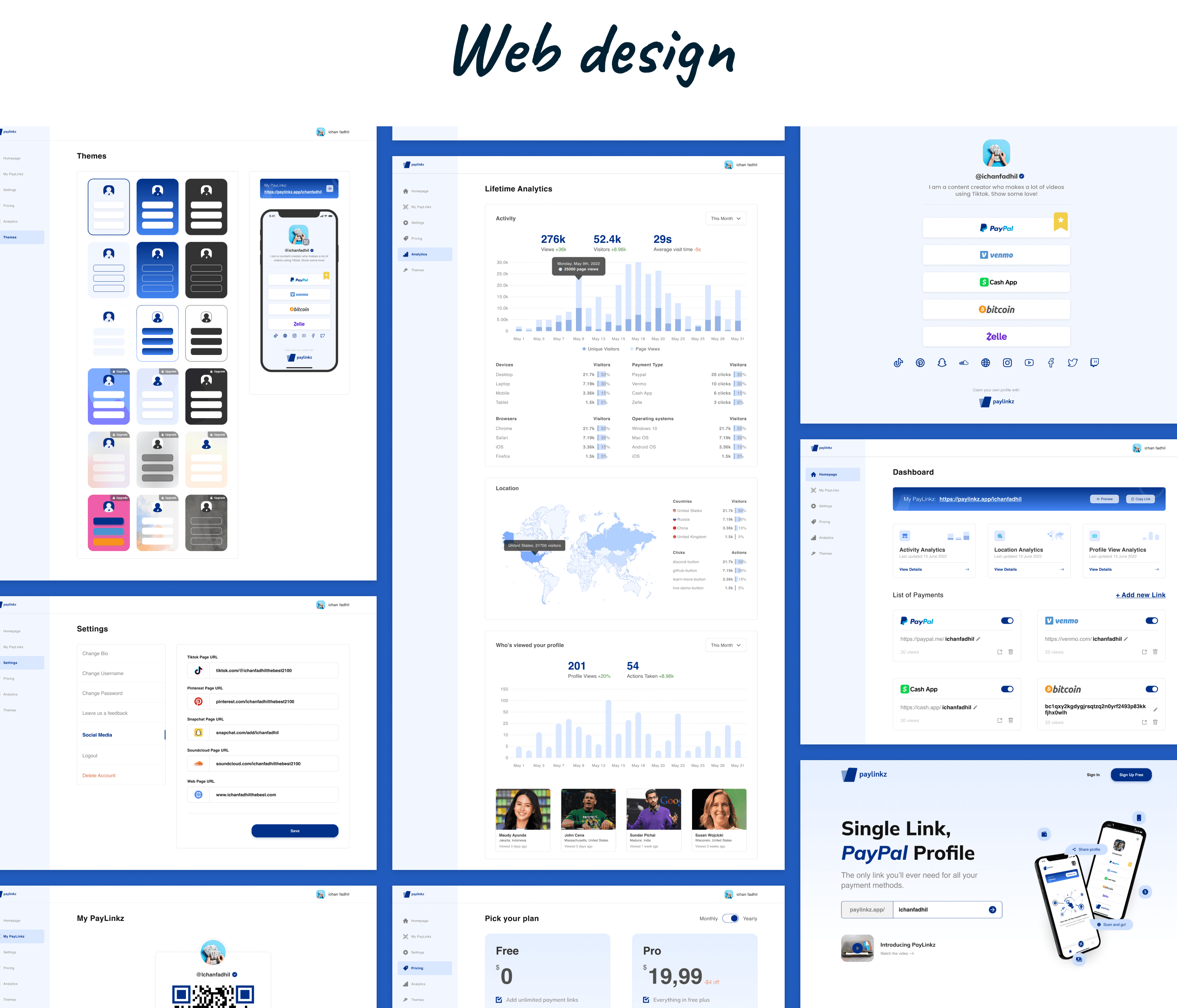
I designed the core experience mobile-first, prioritizing clarity and speed, then scaled it to desktop while preserving hierarchy and interaction patterns.
This ensured users experienced minimal re-learning across devices, reducing friction in repeated payment scenarios.
Most payment interactions happen in time-sensitive, mobile contexts, often when users want to complete a transaction quickly without hesitation.
I designed the core experience mobile-first, prioritizing clarity and speed, then scaled it to desktop while preserving hierarchy and interaction patterns.
This ensured users experienced minimal re-learning across devices, reducing friction in repeated payment scenarios.
Most payment interactions happen in time-sensitive, mobile contexts, often when users want to complete a transaction quickly without hesitation.
I designed the core experience mobile-first, prioritizing clarity and speed, then scaled it to desktop while preserving hierarchy and interaction patterns.
This ensured users experienced minimal re-learning across devices, reducing friction in repeated payment scenarios.
Minimal UI, Clear Intent
Minimal UI, Clear Intent
Minimal UI, Clear Intent
At the moment of payment, hesitation directly impacts conversion.
To reduce decision fatigue, the interface was designed around:
A single primary action: Share your Paylinkz
Clear visual grouping of payment methods to support fast scanning
Strong CTA hierarchy to guide users without overwhelming them
This approach intentionally traded feature visibility for clarity and confidence at the point of action.
At the moment of payment, hesitation directly impacts conversion.
To reduce decision fatigue, the interface was designed around:
A single primary action: Share your Paylinkz
Clear visual grouping of payment methods to support fast scanning
Strong CTA hierarchy to guide users without overwhelming them
This approach intentionally traded feature visibility for clarity and confidence at the point of action.
At the moment of payment, hesitation directly impacts conversion.
To reduce decision fatigue, the interface was designed around:
A single primary action: Share your Paylinkz
Clear visual grouping of payment methods to support fast scanning
Strong CTA hierarchy to guide users without overwhelming them
This approach intentionally traded feature visibility for clarity and confidence at the point of action.
Consistent Design Language
Consistent Design Language
Consistent Design Language
In a fintech product, visual consistency directly influences user trust.
I applied a restrained color palette, clear spacing, and structured typography to keep attention on actions rather than interface complexity.
Reusable components ensured consistency across surfaces while also supporting faster iteration and development scalability.
In a fintech product, visual consistency directly influences user trust.
I applied a restrained color palette, clear spacing, and structured typography to keep attention on actions rather than interface complexity.
Reusable components ensured consistency across surfaces while also supporting faster iteration and development scalability.
In a fintech product, visual consistency directly influences user trust.
I applied a restrained color palette, clear spacing, and structured typography to keep attention on actions rather than interface complexity.
Reusable components ensured consistency across surfaces while also supporting faster iteration and development scalability.
Outcome & Impact
Outcome & Impact
Outcome & Impact
The final design enabled users to share one link instead of multiple payment URLs, significantly reducing confusion during payment interactions.
Clear signals of success included:
Less hesitation from senders when choosing a payment method
Faster payment completion with fewer follow-up questions
Increased confidence when sharing payment details across platforms
The final design enabled users to share one link instead of multiple payment URLs, significantly reducing confusion during payment interactions.
Clear signals of success included:
Less hesitation from senders when choosing a payment method
Faster payment completion with fewer follow-up questions
Increased confidence when sharing payment details across platforms
The final design enabled users to share one link instead of multiple payment URLs, significantly reducing confusion during payment interactions.
Clear signals of success included:
Less hesitation from senders when choosing a payment method
Faster payment completion with fewer follow-up questions
Increased confidence when sharing payment details across platforms
The mobile-first, responsive experience ensured the product worked naturally in real-world payment scenarios—supporting both casual users and frequent payment use cases.
The mobile-first, responsive experience ensured the product worked naturally in real-world payment scenarios—supporting both casual users and frequent payment use cases.
The mobile-first, responsive experience ensured the product worked naturally in real-world payment scenarios—supporting both casual users and frequent payment use cases.
Reflection & Learnings
Reflection & Learnings
Reflection & Learnings
This project reinforced that simplicity is not about removing features, but about designing clear defaults and progressive disclosure.
One key learning was the importance of trust in fintech products: visual clarity, spacing, and hierarchy play a critical role in making users feel confident at the moment of transaction.
If revisiting the project, I would validate design decisions earlier with lightweight usability testing focused specifically on:
payment hesitation moments
sender confidence before completing a transaction
This would help further optimize conversion and reduce friction in high-intent user flows.
This project reinforced that simplicity is not about removing features, but about designing clear defaults and progressive disclosure.
One key learning was the importance of trust in fintech products: visual clarity, spacing, and hierarchy play a critical role in making users feel confident at the moment of transaction.
If revisiting the project, I would validate design decisions earlier with lightweight usability testing focused specifically on:
payment hesitation moments
sender confidence before completing a transaction
This would help further optimize conversion and reduce friction in high-intent user flows.
This project reinforced that simplicity is not about removing features, but about designing clear defaults and progressive disclosure.
One key learning was the importance of trust in fintech products: visual clarity, spacing, and hierarchy play a critical role in making users feel confident at the moment of transaction.
If revisiting the project, I would validate design decisions earlier with lightweight usability testing focused specifically on:
payment hesitation moments
sender confidence before completing a transaction
This would help further optimize conversion and reduce friction in high-intent user flows.
Closing Summary
Closing Summary
Closing Summary
Paylinkz demonstrates how focused problem framing and simplicity-driven design can significantly improve everyday digital experiences.
By reducing complexity into a single, intuitive action, the product helps users manage payments more efficiently—regardless of platform.
Paylinkz demonstrates how focused problem framing and simplicity-driven design can significantly improve everyday digital experiences.
By reducing complexity into a single, intuitive action, the product helps users manage payments more efficiently—regardless of platform.
Paylinkz demonstrates how focused problem framing and simplicity-driven design can significantly improve everyday digital experiences.
By reducing complexity into a single, intuitive action, the product helps users manage payments more efficiently—regardless of platform.
More of my work
More of my work
More of my work
Senior Product Designer with 7+ years of experience, focused on product thinking, education, and mentorship.
© 2026 Raden Rizqan // ICHAN — Built with intention.
Senior Product Designer with 7+ years of experience, focused on product thinking, education, and mentorship.
© 2026 Raden Rizqan // ICHAN — Built with intention.
Senior Product Designer with 7+ years of experience, focused on product thinking, education, and mentorship.
© 2026 Raden Rizqan // ICHAN — Built with intention.